You're not imagining it
Maybe you've always been the calm one. The person who handles everything. Then, somewhere in your 40s, something shifted. You wake at 3 a.m. with your heart racing. Small things set you off. Worry follows you through the day, even when nothing is actually wrong.
If this sounds familiar, you might be wondering whether something is wrong with you. Often, the answer is simpler, and kinder: your body may be entering perimenopause, and anxiety is one of its most common, and least talked about, symptoms.
Why perimenopause can bring on anxiety
Perimenopause is the transition leading up to menopause. It often begins in the early to mid-40s and can last anywhere from a few years to more than a decade. During this time, hormones don't simply decline. They rise and fall unpredictably, and that unpredictability matters.
Hormones affect your brain, not just your cycle. Estrogen helps regulate serotonin, dopamine, and GABA, the brain chemicals that keep mood and stress steady. Progesterone has a naturally calming effect. When these hormones swing up and down, your nervous system can feel it as worry, irritability, or a sense of being on edge.
Physical symptoms add fuel. Night sweats and hot flashes disrupt sleep, and poor sleep makes anxiety worse. A racing heart from a hot flash can feel a lot like panic.
Midlife is full. Many women in this stage are also caring for children or aging parents, managing careers, and facing changes in relationships and identity. Hormonal shifts can make all of that harder to carry.
Research suggests that women may experience increased anxiety and depressive symptoms during the menopausal transition, even without a previous history of significant mental health difficulties.
Signs your anxiety may be connected to perimenopause
Only a medical provider can confirm perimenopause, but these patterns are worth noticing:
The anxiety is new, or noticeably worse, in your 40s or early 50s
It seems to come out of nowhere, without an obvious trigger
You wake in the night with a racing heart or racing thoughts
Your moods feel more intense or harder to predict
You're more irritable or easily overwhelmed than you used to be
Your periods are changing, becoming irregular, heavier, lighter, or skipped
You're also noticing hot flashes, night sweats, brain fog, or trouble sleeping
Many women also describe simply not feeling like themselves. That feeling is real, and it deserves attention.
What helps
The good news is that perimenopause anxiety is treatable, and you don't have to simply wait it out. Most women do best with support on two fronts.
Talk with your medical provider. An OBGYN, nurse practitioner, or menopause specialist can help confirm whether you're in perimenopause and discuss options. Hormone therapy may help some women, particularly when symptoms are associated with other menopausal changes, but research on its effects on anxiety remains mixed.
Consider therapy. Hormones are only part of the picture. Therapy gives you a place to:
Learn practical tools to calm your nervous system when anxiety spikes
Untangle what's hormonal from what's stress, grief, or life change
Work through shifts in identity, relationships, and how you see yourself
Feel less alone in an experience that many women go through quietly
Care for the basics. Protecting your sleep, moving your body, cutting back on alcohol and caffeine, and practicing mindfulness can all lower anxiety. They work best alongside support, not in place of it.
When to reach out
It's time to get support if anxiety is affecting your sleep, your work, or your relationships, or if you simply don't feel like yourself anymore. You don't have to wait until things fall apart.
At Her Healing Therapy, I offer virtual therapy for women in North Carolina and Washington, DC navigating perimenopause, menopause, and life's transitions. Together, we can make sense of what you're feeling and help you find steadier ground.
Schedule a consultation to get started.
This post is for general information and isn't a substitute for medical or mental health care. If you're in crisis, call or text 988.
Sources
About the author
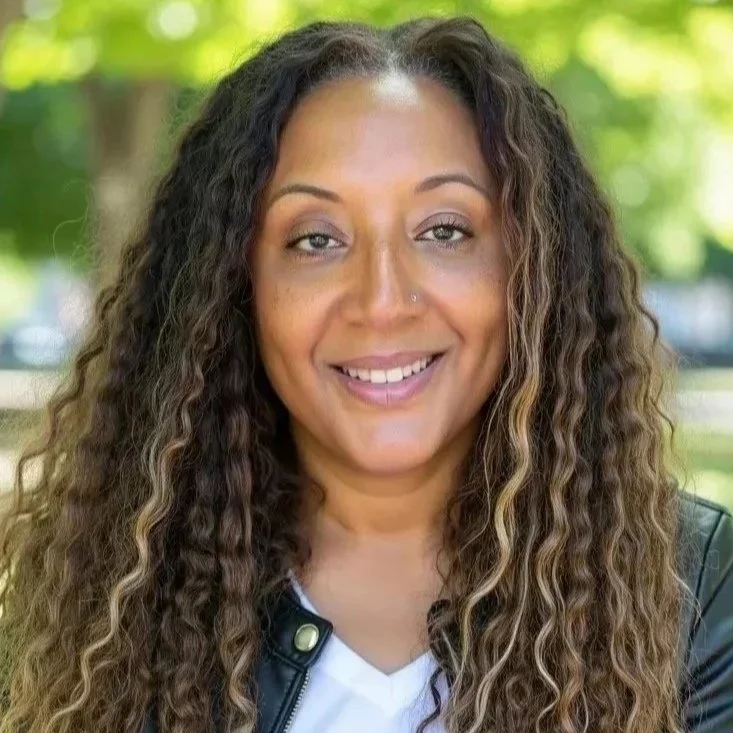
Marlo Sell, LCMHC, LPC, is the founder of Her Healing Therapy, PLLC. She provides virtual therapy for women in North Carolina and Washington, DC, specializing in anxiety, depression, perimenopause, menopause, and life transitions. Learn more about Marlo.